
Episode Summary
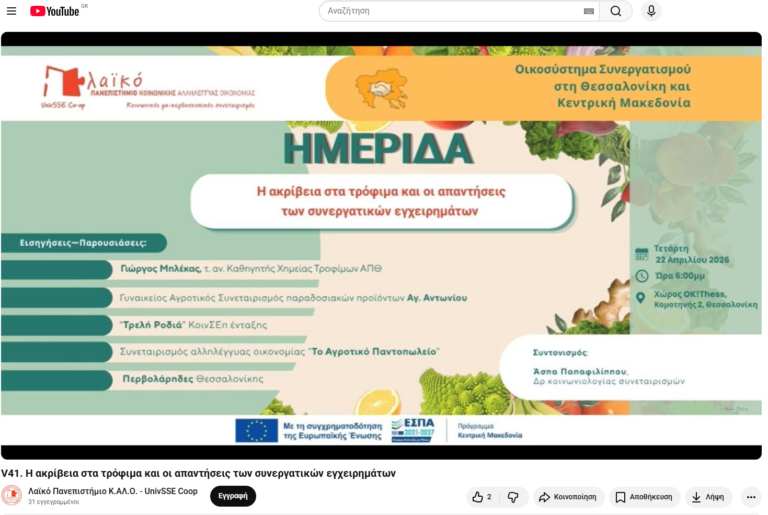
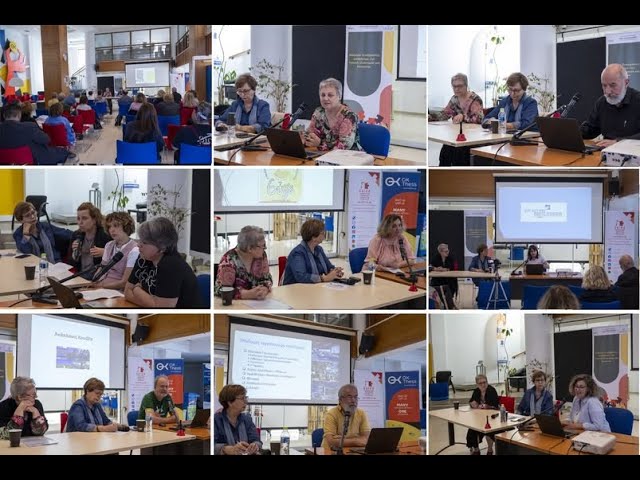
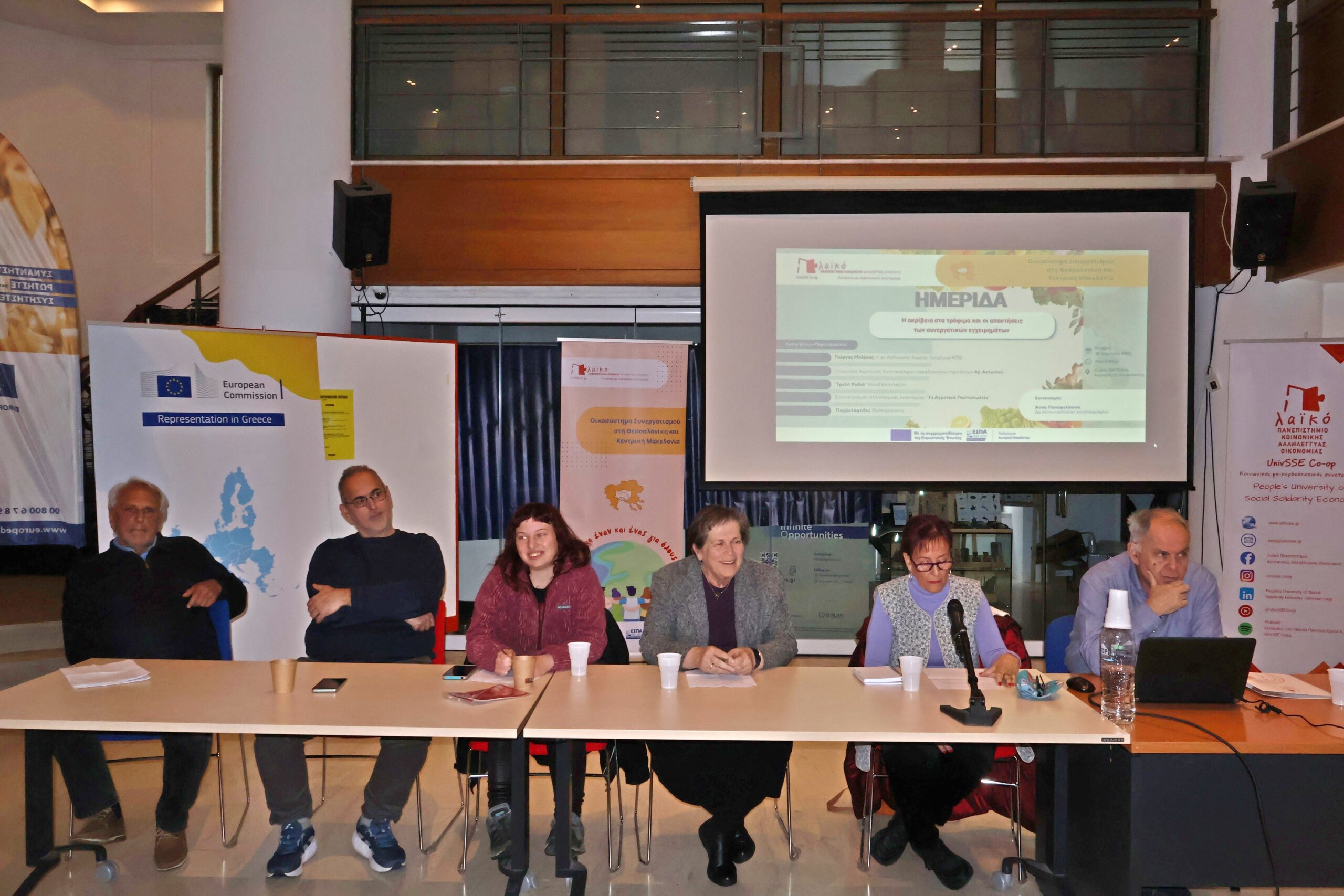
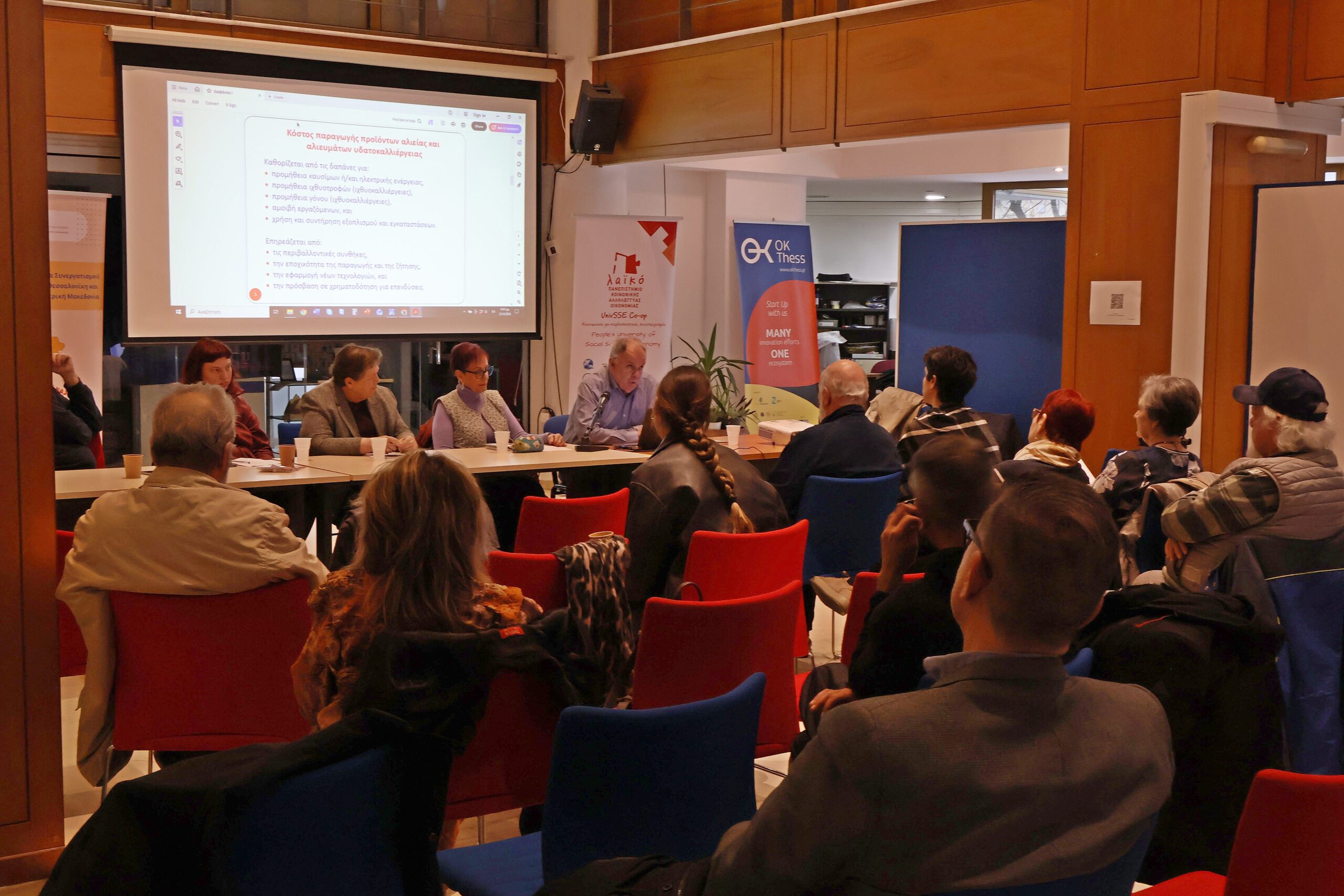
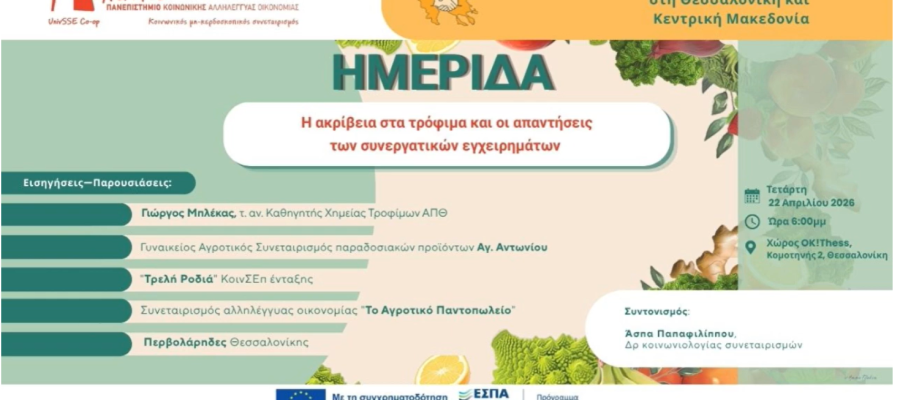
“Rising Food Prices and the Responses of Cooperative Initiatives” was the theme of a one-day event organised within the framework of the “Cooperation Ecosystem in Thessaloniki and Central Macedonia” on Wednesday, 22 April 2026, at OK!Thess.
The event addressed issues such as the causes of rising food prices, profiteering by intermediaries, high taxation and soaring energy costs.
The event was opened by Giorgos Blekas, former Associate Professor of Food Chemistry at Aristotle University of Thessaloniki and Vice-President for Infrastructure of the People’s University of Social and Solidarity Economy. Among other issues, he referred to the quality of the food reaching our tables, which is also being adversely affected by rising prices.
Members of four organisations within the Cooperation Ecosystem that work in the field of food then presented the proposals and practical alternatives that cooperative initiatives can offer.
Despoina Ioannidou, President of the Women’s Agricultural Cooperative of Traditional Products of Agios Antonios, presented the work of the cooperative. It succeeds both in creating employment opportunities for women farmers and in promoting traditional, handmade products without intermediaries, while maintaining affordable prices and high quality.
She was followed by Katerina Kallergi from the Work Integration Social Cooperative Enterprise “Treli Rodia”, one of whose main objectives is the social and occupational reintegration of people recovering from addiction. Alongside this important social mission, Treli Rodia produces and sells aromatic plants, vegetables and fruit from traditional varieties directly, without intermediaries. It also cultivates an estate with 420 pomegranate trees, offering high-quality products at affordable prices. The use of traditional varieties could play a decisive role in reducing production costs.
Michalis Panagiotidis, a member of the solidarity economy cooperative “The Agricultural Grocery Store”, a cooperative of producers and consumers, presented its core principles, which challenge the idea that food should be treated as an arena for speculation. He also referred to the two large markets organised each month at the former tobacco warehouses in Nea Krini and at Aretsou Beach. These markets bring producers directly into contact with consumers, without intermediaries who profit at the expense of both people and the natural environment. The initiative emerged during the previous economic crisis through the “Without Intermediaries” movement, which gained such widespread support that it provoked political reaction and repression.
Finally, Filippos Polatsidis presented the association “Pervolarides”, which organises workshops on food utilisation, urban cultivation and education around the commons. One of the association’s main objectives is to recover food that would otherwise be discarded and process it into sauces, jams and other products. Based on cooperation and care, it also organises activities in support of vulnerable social groups, cultivating and distributing vegetables and food to people in need and providing meals to homeless people.
Highlighting the work of these four organisations in response to rising food prices is particularly important, especially in view of the implementation of the Mercosur agreement between countries of Latin America and the European Union, which is expected to affect both producers and consumers, particularly in terms of food quality. Building new cooperative initiatives and strengthening existing ones is therefore vital for everyone.
The discussion was moderated by Aspa Papafilippou, PhD in the Sociology of Cooperatives and Vice-President for Education of UnivSSE Coop.
The development of the “Cooperation Ecosystem in Thessaloniki and Central Macedonia” is implemented with the support of the People’s University of Social and Solidarity Economy, “UnivSSE Coop”, and co-funded by the European Union through the NSRF Programme “Central Macedonia 2021–2027.”
Watch the presentations here.
Cooperation Ecosystem in Thessaloniki and Central Macedonia
The social, non-profit cooperative People’s University of Social and Solidarity Economy “UnivSSE Coop” is implementing the programme “Cooperation Ecosystem in Thessaloniki and Central Macedonia.” The programme aims to create a cohesive network connecting cooperatives, small businesses, local organisations and citizens, while strengthening the social economy, promoting solidarity and addressing challenges such as poverty, unemployment and social exclusion.
The programme’s overall objective is to promote social inclusion and combat poverty, unemployment and social exclusion by strengthening the Social and Solidarity Economy (SSE) and social innovation.
The “Cooperation Ecosystem in Thessaloniki and Central Macedonia” programme lays the foundations for a sustainable and inclusive economy and society by promoting social innovation and employment through the Social and Solidarity Economy, with long-term benefits for the region.
Ο γενικός στόχος του προγράμματος είναι η προώθηση της κοινωνικής ένταξης και η καταπολέμηση της φτώχειας, της ανεργίας και του κοινωνικού αποκλεισμού μέσω της ενίσχυσης της Κοινωνικής Αλληλέγγυας Οικονομίας (ΚΑΛΟ) και της Κοινωνικής Καινοτομίας.
Το πρόγραμμα “Οικοσύστημα Συνεργατισμού στη Θεσσαλονίκη και Κεντρική Μακεδονία” θέτει τις βάσεις για μια βιώσιμη και συμπεριληπτική οικονομία και κοινωνία, ενισχύοντας την κοινωνική καινοτομία και την απασχόληση μέσω της ΚΑΛΟ, με μακροπρόθεσμο όφελος για την περιοχή.