
Episode Summary
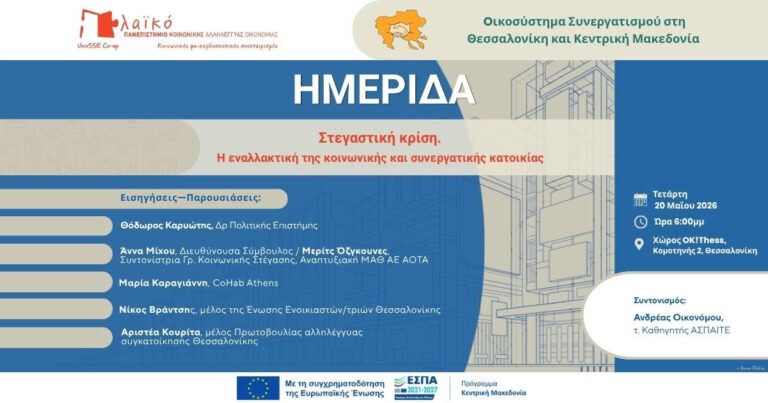
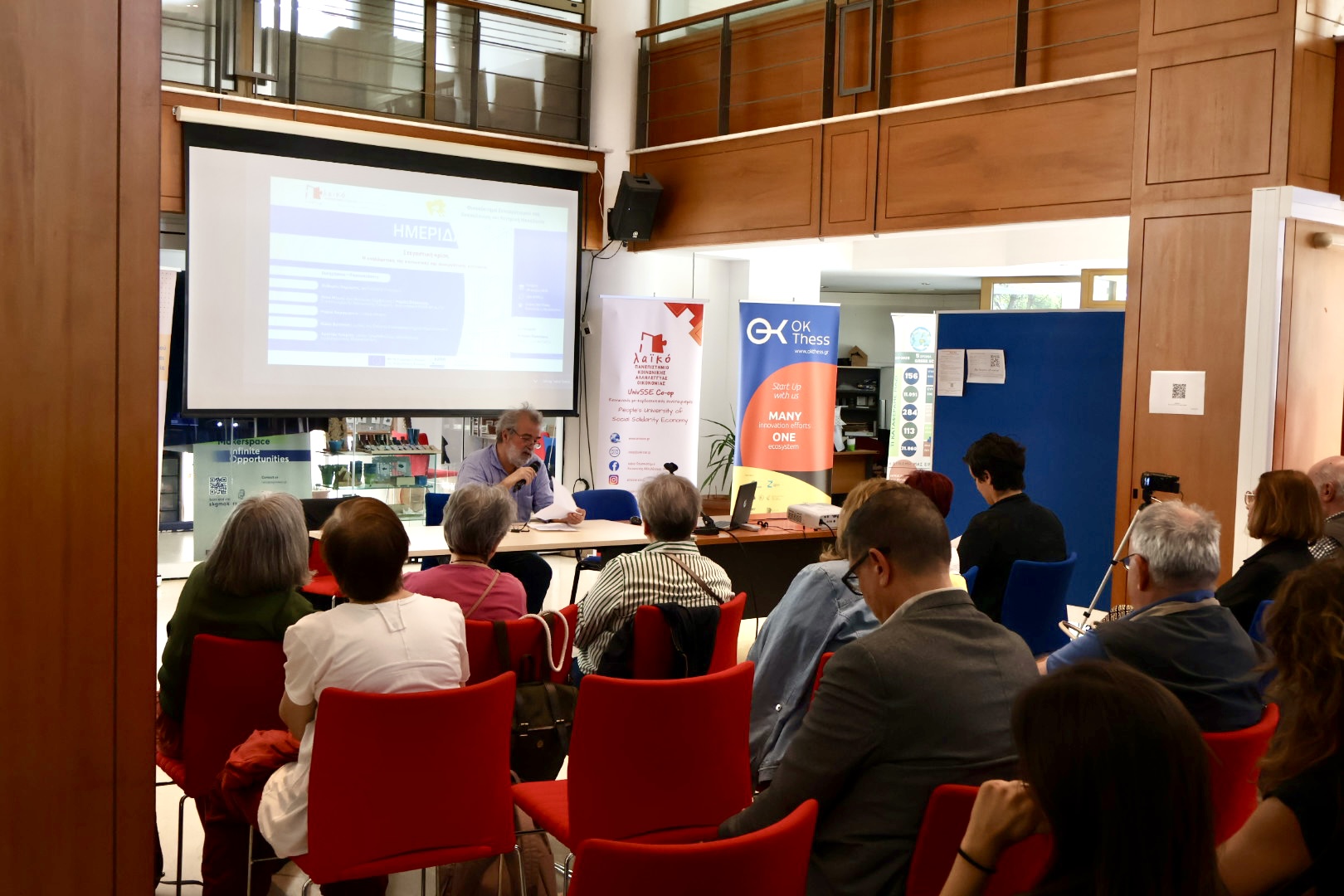
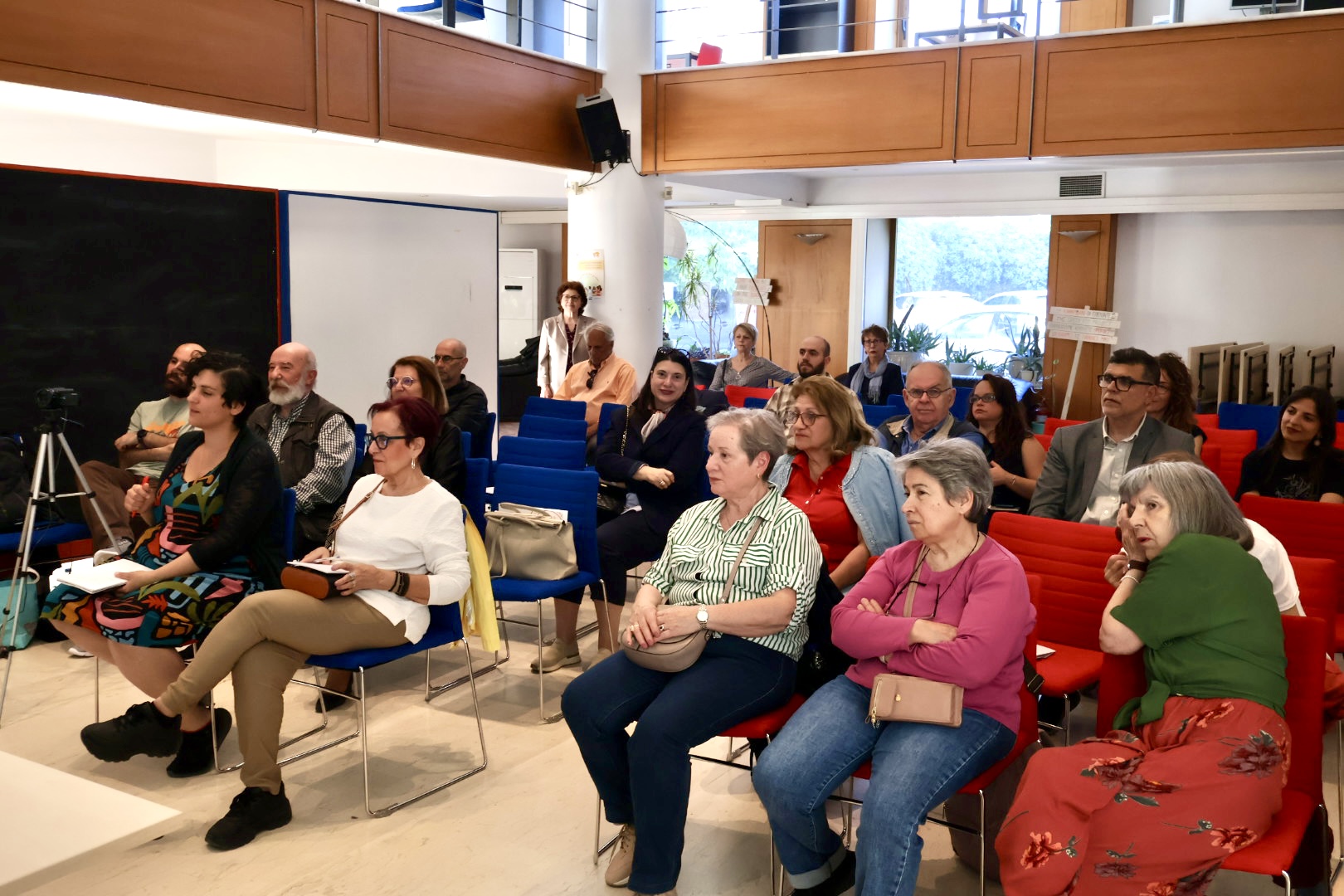
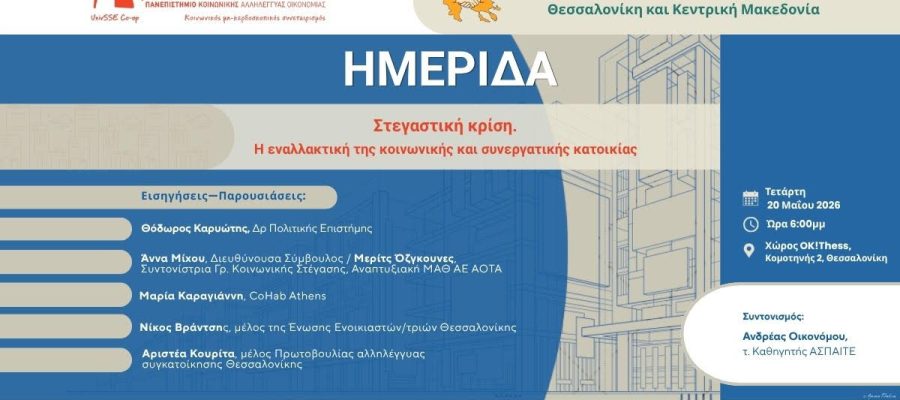
As part of the “Cooperation Ecosystem in Thessaloniki and Central Macedonia”, a one-day event was held on Wednesday, 20 May, at OK!Thess, on the topic:
“Housing Crisis: The Alternative of Social and Cooperative Housing”
The discussion addressed issues such as the transformation of the right to housing into a commodity, unaffordable rental prices and their social consequences, as well as alternative models of social and cooperative housing. One of the main contradictions highlighted by all speakers was the coexistence of large numbers of empty and often abandoned houses and apartments with the sharp rise in homelessness, as well as the increasing number of adults who continue to live with their parents because of the housing crisis.
Thodoros Karyotis, PhD in Political Science and member of UnivSSE Coop, stressed, among other points, that the housing crisis is not caused simply by rising prices or insufficient supply, but is fundamentally a political issue. On the one hand, successive governments and the political system have consistently promoted home ownership as the ideal model for households. As a result, society finds it difficult to view housing as a social good and a right, and instead tends to treat it as a personal achievement or a commodity. On the other hand, through the deliberate promotion of short-term rentals, investment funds, “golden visas” and similar measures, even renting has become financially prohibitive, while home ownership has turned into an unattainable dream for younger generations. In this context, cooperative and social or public housing are not merely alternatives, but necessities.
Anna Michou, Chief Executive Officer of the Development Agency of Thessaloniki, MATΗ SA OTA, then presented the experience of the programme “Social Housing for the Most Vulnerable Groups”, implemented by the Agency’s Social Housing Office. The programme first recorded the number of vacant apartments in Thessaloniki, estimated at 77,000, and then, in cooperation with municipalities and legal entities, renovated and leased 40 apartments to people from vulnerable social groups. The Social Housing Office also managed to secure affordable rents, between 30% and 65% below market prices. Although the programme may appear to be “a drop in the ocean”, as the speaker herself noted, it represents a starting point and a model for the future, so that the drop can eventually become a river. The Social Housing Office is already planning its next programme, involving 100 apartments in the western part of the city.
Maria Karagianni, a member of CoHab Athens, spoke about the different models of cooperative or collaborative housing, which nevertheless share certain common foundations: collective ownership, the decommodification of housing, democratic management, and ultimately the desire of people not only to share housing costs, but also aspects of their lives. CoHab aims to promote cooperative housing models, stimulate public debate, provide information, and transfer examples and practices from abroad. One of its key initiatives is “Claimed”, which, as its name suggests, campaigns for the use of vacant public buildings that could support such housing models. Another objective of the group is to contribute to the establishment of a supportive institutional framework and the legal recognition of cooperative housing, which is currently lacking in Greece.
Nikos Vrantsis, a member of the Thessaloniki Tenants’ Union, described the unchecked practices of landlords who, due both to the absence of legislation protecting tenants and to the insecurity this creates, impose abusive contractual terms, refuse to carry out necessary repairs, and sharply increase rents. One of the tools used to exert pressure is the threat of eviction, which may become even more serious in the near future, as legislation is being prepared to accelerate eviction procedures. The Tenants’ Union deals with these issues by helping tenants respond to everyday disputes with landlords. At the same time, having identified that individual strategies and claims are promoted by the political establishment as the main solution to social problems, the Union seeks instead to promote and strengthen collective organisation.
Finally, Aristea Kourita, a member of the Thessaloniki Solidarity Co-Housing Initiative, emphasised that housing is a social right, which was also the central principle behind the creation of the group. Its members share common needs and visions for a different model of co-housing, based on equality, solidarity, direct democracy, respect, tolerance, trust and inclusion.
She also noted that, at a time when the housing crisis is taking on uncontrolled dimensions, solidarity-based co-housing puts forward collective solutions to problems that are often treated as individual, even though they are not, including housing, food and water, health, care, companionship and social participation. Mutual care among members of the community, the transfer of specialist knowledge and skills, and collective work within and for the community are all ways in which individual needs can be transformed into collective responses.
Watch the presentations here
Cooperation Ecosystem in Thessaloniki and Central Macedonia
The social, non-profit cooperative People’s University of Social and Solidarity Economy “UnivSSE Coop” is implementing the programme “Cooperation Ecosystem in Thessaloniki and Central Macedonia.” The programme aims to create a cohesive network connecting cooperatives, small businesses, local organisations and citizens, while strengthening the social economy, promoting solidarity and addressing challenges such as poverty, unemployment and social exclusion.
The programme’s overall objective is to promote social inclusion and combat poverty, unemployment and social exclusion by strengthening the Social and Solidarity Economy (SSE) and social innovation.
The “Cooperation Ecosystem in Thessaloniki and Central Macedonia” programme lays the foundations for a sustainable and inclusive economy and society. By promoting social innovation and employment through the Social and Solidarity Economy, it seeks to generate long-term benefits for the region.